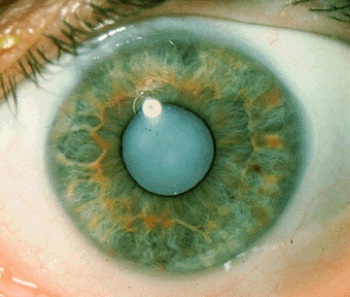
NEWEST IN CATARACTS

CATARACT SURGERY: NEWEST TECHNOLOGY
Cataract Surgery

By Marilyn Haddrill; contributions and
review by Charles Slonim, MD
Share this page:
On this page
-
•Cataract surgery video
In cataract surgery, the cloudy natural lens must be removed from the eye. After that, in most cases a permanent intraocular lens (IOL) implant replaces the natural lens to restore focusing power.
When to have cataract surgery often is a subjective decision, based on how well you are able to see during routine activities. You might be able to drive, watch television and work at a computer for quite a few years, even after you are first diagnosed with cataracts.
However, if you have cataracts, you may eventually start to notice "ghost" images and declining visual clarity, which can't be corrected with glasses or contacts. Colors may begin to look faded, too. If your functional vision is impaired significantly and it becomes difficult for you to perform your normal daily activities, it may be time for cataract surgery.
Preparing for Cataract Surgery
Once you and your eye doctor have decided that you will have your cataract removed, the eye surgeon will examine you. For the immediate time period before and after cataract surgery, ask your surgeon if you should continue your usual medications and nutritional supplements.
As an example, a common drug that treats men with enlarged prostates — Flomax and similar medications known as alpha-blockers — could cause problems associated with intraoperative floppy iris syndrome (IFIS) during cataract surgery. Patients on Flomax or similar medications should notify their eye surgeon before undergoing cataract surgery.
You may be given a choice of implantation with a regular single-vision (monofocal) intraocular lens or a presbyopia-correcting intraocular lens for replacement of your eye's natural lens.
Determining the right IOL for you can be based on many factors, including your lifestyle and ability to pay. If you are interested in correcting presbyopia, which all people have beginning at around age 40, you potentially could restore your ability to see at all distances with a multifocal IOL or accommodating IOL.
However, you must consider that extra cataract surgery costs do occur with "premium" IOLs, even though they may reduce or eliminate dependency on eyeglasses.
Before cataract surgery, your eye will be thoroughly measured in a preliminary eye exam to determine the proper power of the intraocular lens that will be placed in your eye. If you choose a premium IOL, you may need extra tests to make sure measurements are exact and that you don't have other vision problems that might hamper the performance of the IOL.
If you need cataracts removed from both eyes, surgery usually will be done on only one eye at a time. An uncomplicated surgical procedure lasts only about 10 minutes. However, you may be in the outpatient facility for 90 minutes or longer, because extra time will be needed for preparation and recovery.
At least a few days to weeks typically will be needed between surgeries, so that your first eye has the chance to heal and be evaluated in a follow-up exam for any possible problems.
What Happens During Cataract Surgery?
Cataract surgery usually is done on an outpatient basis. You may be asked to skip breakfast and avoid drinking liquids, depending on the time of your surgery. Also, do not wear eye makeup on the day of surgery. Upon arrival at the facility, you will be given eye drops to dilate your pupils and perhaps a sedative to help you relax. A local or topical anesthetic will make the operation painless.

The skin around your eye will be thoroughly cleansed, and sterile coverings will be placed around your eye and head.
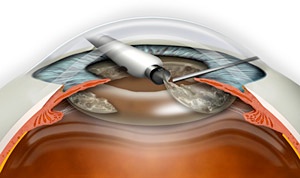
Under an operating microscope, at least one small incision is made into the eye. The surgeon will then remove your cloudy lens (the cataract).
This procedure can be performed using an ultrasound-driven instrument that "sonically" breaks up the cataract (phacoemulsification) as it is suctioned (aspirated) out of the eye.
In another surgical method, special instruments are used to mechanically break up the cloudy lens into small pieces (phacofracture) and remove them directly from the eye through a small incision.
The surgeon will insert a plastic or silicone IOL inside the eye to replace the natural lens that was removed.
Most incisions used for cataract surgery are self-sealing. However, on occasion, incisions may need to be sutured. When stitches are used, they rarely need to be removed.
Cataract Surgery Recovery
When the operation is over, the surgeon will usually place a protective shield over your eye. After a short stay in the outpatient recovery area, you will be ready to go home. Plan to have someone else drive you home.

Watch this video about how cataract surgery works.
You will need to administer eye drops, as prescribed by your surgeon, several times daily during the next few weeks. You also will need to wear your protective eye shield while sleeping or napping, for about a week after surgery. You will be given sun shades to help protect your eye in bright light.
While your eye heals, you might experience some blurred vision during the first few days or even weeks following the procedure.
During at least the first week of your recovery, it is essential that you avoid:
-
•Strenuous activity and heavy lifting (nothing over 25 pounds).
-
•Bending, exercising and similar activities that might stress your eye while it is healing.
-
•Water that might splash into your eye and cause infection. Keep your eye closed while showering or bathing. Also, avoid swimming or hot tubs for at least two weeks.
-
•Any activity (such as changing cat litter boxes) that would expose your healing eye to dust, grime or other infection-causing contaminants.
Although the basic postoperative instructions are similar among most eye surgeons, each surgeon may have specific recovery instructions depending on the outcome of your surgery. Always follow your surgeon's specific instructions, which you will receive prior to your discharge from the outpatient facility.
Complications of Cataract Surgery
Glaucoma or a buildup of pressure within the eye (intraocular pressure) also occurs sometimes after cataract surgery. If your eye pressure remains high, you may need additional treatment such as eye drops, a laser procedure, pills or additional surgery.
Far more rarely, you might experience problems such as a decentered intraocular lens that might need to be repositioned or replaced in a second surgery.
Various complications, ranging from minor to serious, also can take place as a direct result of the surgical procedure, including tearing of the posterior capsule holding the intraocular lens in place.
JANUARY 2012